
Lumis Joseph Beyoncé Jr. is often described within discussions of the Knowles-Beyoncé family as a lesser-known relative connected to the broader musical lineage. He is occasionally referenced in narratives about Galveston Texas and the early roots of the family, where migration and community ties shaped identity. Some accounts loosely associate him with Beyoncé uncle status in extended genealogy discussions, though records remain unclear and largely anecdotal.
His name sometimes appears in reflections on African American family history and the evolving storytelling around the Knowles lineage. Though not a widely documented figure, he is occasionally mentioned in broader discussions of family legacy music, heritage, and cultural memory and generational cultural identity.
Who Was Lumis Joseph Beyoncé Jr.? (Profile Summary)
Lumis Joseph Beyoncé Jr. was Tina Knowles’ brother and Beyoncé’s uncle. He wasn’t chasing fame. He was building something far more valuable — a legacy rooted in family-first mindset, faith, and community impact. Most people never heard his name. Yet his story matters more than you’d think.
The Man Behind the Famous Surname
Everyone knows the name Beyoncé. But long before it lit up stadium marquees, it belonged to a humble man from coastal Texas. Known warmly as “Skip Beyoncé,” Lumis carried the Beyoncé family name origin with quiet pride. He never needed a spotlight to matter.
| Detail | Information |
|---|---|
| Full Name | Lumis Joseph Beyoncé Jr. |
| Nickname | Skip |
| Date of Birth | July 10, 1949 |
| Birthplace | Galveston, Texas |
| Date of Death | March 13, 2016 |
| Age at Death | 66 |
| Relation to Beyoncé | Uncle (Tina Knowles’ brother) |
| Father | Lumis Albert Beyoncé |
| Mother | Agnes Dereon Beyoncé |
Early Life in Galveston, Texas

Growing up in Galveston, Texas during the 1950s wasn’t simple for a young Black boy. The Gulf Coast region carried both beauty and hardship. Racial segregation shaped daily life. Yet the Galveston community also pulsed with resilience, culture, and deep neighborhood pride that young Lumis absorbed every single day.
The salty Gulf breeze, the tight-knit streets, the church on Sunday mornings — all of it shaped Lumis Joseph Beyoncé Jr. into the man he became. Galveston’s African American heritage ran rich with stories of survival and strength. Skip didn’t just grow up there. He grew from there.
Growing Up on the Gulf Coast in the 1950s
Galveston in the 1950s was a world unto itself. Black families built communities full of warmth despite living under segregation’s heavy shadow. Young Skip watched his father work hard every single day. That image never left him. It became the blueprint he followed for the rest of his life.
The Galveston community taught its children three things above all else — respect your elders, work without complaint, and never forget where you came from. Lumis Joseph Beyoncé Jr. took every one of those lessons seriously. You can trace a straight line from those Gulf Coast streets to the values his famous niece carries on stage today.
Family Background — Parents, Roots & Origins
The Knowles-Beyoncé family tree runs deep. At its roots stood two remarkable people — Lumis Albert Beyoncé and Agnes Dereon Beyoncé. His father worked as a longshoreman on the Galveston docks. His mother held the household together with faith, discipline, and unconditional love. Together they raised children who understood what truly mattered in life.
The Beyoncé birth name origin traces back to African and Creole roots, carried through generations before it ever graced a concert ticket. Agnes Dereon Beyoncé passed her maiden name — Dereon — down through the family line. You’ll recognize it today in Tina Knowles’ fashion label, House of Deréon, named in her mother’s honor. That’s how deep these roots run.
The Beyoncé Name Before It Was Famous
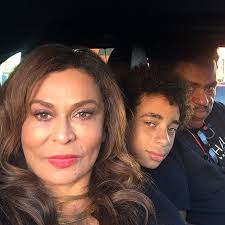
The Beyoncé family name origin is far more layered than most fans realize. It wasn’t invented for marketing. It wasn’t a stage creation. It came straight from African American family history, carried proudly by the longshoreman father who worked Galveston’s docks with calloused hands and an unbreakable spine. Lumis Albert Beyoncé gave his children more than a name — he gave them an identity.
When Tina Knowles later gave her daughter the Beyoncé maiden name as a first name, it was a deliberate act of preserving family stories. It honored the lineage. It said clearly — this family name deserves to live on. And live on it did, in ways nobody could have possibly imagined back on those Gulf Coast streets.
Lumis and Tina Knowles: The Brother-Sister Bond
The sibling bond between Skip and Célestine Ann Beyoncé — the birth name of Tina Knowles — was something truly special. Five years separated them in age. But nothing separated them in loyalty. Skip became a protective older brother early on, guiding his younger sister through the complexities of growing up in 1950s and 60s Texas. Their bond didn’t weaken with time. It deepened.
Tina has spoken openly about Knowles family values and how family always came first. Much of that family-first mindset traces directly back to Skip’s influence. He modeled steadiness. He showed Tina what a reliable, present family member looked like. That modeling quietly shaped the mother Tina became and the daughters she raised.
Skip and Célestine — A Lifelong Connection
Friends of the family described their relationship as unshakeable. Skip made Célestine Ann Beyoncé laugh during hard times. He showed up when it mattered. Their sibling bond wasn’t loud or performative — it was the kind built in kitchens, at Sunday dinners, and through years of simply being there. That’s the bond that lasts a lifetime.
It’s impossible to look at Beyoncé and Solange Knowles today without seeing echoes of Skip and Tina’s relationship. The way Solange Knowles and her sister publicly champion each other mirrors exactly the dynamic Skip established decades earlier. Generational values don’t disappear. They simply change faces and find new expression.
Education, Career & Life Beyond the Spotlight
Lumis Joseph Beyoncé Jr. came of age during one of America’s most turbulent educational periods for Black students. Schools in Galveston, Texas were navigating desegregation throughout the late 1950s and 1960s. Skip pursued his education in that charged environment. He never let the obstacles define his ceiling. Instead he pushed through with the same work ethic his longshoreman father had modeled every morning before dawn.
After school, Skip built his career quietly across the Gulf Coast region. He worked in local industries, contributed to his neighborhood, and focused on building real relationships rather than chasing titles. His community impact was felt not through headlines but through handshakes, through favors returned, and through the younger workers he spent time mentoring younger workers with patience and practical wisdom.
A Life Built on Quiet Dedication
Skip’s career never made news. That was never the point. He operated with quiet dignity in every role he took on. Colleagues remembered him as someone who arrived early, worked hard, and left people better than he found them. That’s a rare combination. It speaks to a man who understood his purpose clearly.
Throughout the 1980s and 90s, his community impact in Galveston, Texas grew steadily. He contributed to local fundraisers, showed up for neighbors, and lived out his philanthropic values without ever calling them that. For Skip, helping people wasn’t a strategy. It was simply who he was.
Marriage, Children & Grandchildren
Lumis Joseph Beyoncé Jr. built his own family with the same dedication he brought to everything else. He understood that private family life was something worth protecting. In a world increasingly hungry for exposure, Skip chose a different path. He kept his home life warm, present, and shielded from outside noise.
Details about his wife and children remain largely private, consistent with the Knowles family values of protecting personal boundaries. What family friends confirm is that Skip was a devoted husband and a present father. He raised his children with the same generational values instilled in him by Lumis Albert Beyoncé and Agnes Dereon Beyoncé — faith first, family second, everything else after.
The Family He Built Away From Fame
Skip’s children grew up without cameras or public scrutiny. They knew their father as a steady, loving man — not as a footnote in a celebrity story. His grandchildren represent the next generation of the Beyoncé family name origin, carrying forward a lineage that stretches back through Galveston’s docks, coastal churches, and close-knit neighborhoods. The Beyoncé named after family tradition honors all of them — not just the famous ones.
His private family life stood in striking contrast to his niece’s global fame. Yet both reflect the same core truth. Whether you’re filling stadiums or raising grandchildren in Webster, Texas — what you leave behind in people matters far more than what you leave behind in headlines.
The 1967 Incident — A Defining Moment
1967 was a powder-keg year across America. Civil rights tensions were raw. Texas, like much of the South, carried the weight of deep racial inequality. For Lumis Joseph Beyoncé Jr., something significant happened that year — an incident that tested his character and quietly shaped who he became. Understanding this moment requires understanding the world he was navigating as a young Black man in the Gulf Coast region during one of America’s most volatile decades.
The specifics of the 1967 incident reflect the broader realities of African American family history during this era. Black families in Galveston, Texas faced constant navigation between dignity and danger. Skip’s response to whatever challenge that year brought revealed something essential about his character — he didn’t break. He adapted. He carried the weight without letting it crush him. That capacity for resilient spirit became one of his most defining traits.
What Happened and Why It Matters
The 1967 incident isn’t just a biographical detail. It’s a window into the cultural legacy of Black families in the American South during the civil rights era. Many families like the Knowles-Beyoncé family have chapters shaped by moments of confrontation, injustice, or hardship that outsiders never fully see. These moments don’t disappear. They embed themselves into generational values and surface later in unexpected ways.
Skip’s ability to face difficulty without bitterness speaks directly to the African American heritage of resilience his parents modeled. Preserving family stories like this one matters because they provide context. They explain why a family like the Knowles-Beyoncés places such fierce emphasis on dignity, strength, and loyalty. Those values didn’t come from nowhere. They came from moments exactly like 1967.
His Later Life in Webster, Texas
At some point, Lumis Joseph Beyoncé Jr. relocated from Galveston, Texas to Webster, Texas — a small city sitting just south of Houston. The move marked a new chapter. Webster offered a quieter pace, a tighter community feel, and the kind of settled stability that Skip had always valued. He put down roots there and continued living out his family-first mindset far from any public eye.
Webster, Texas became the place where Skip’s story quietly concluded. He built local friendships, stayed connected to community life, and maintained the magnetic personality that everyone who knew him consistently described. He wasn’t a man of grand gestures. He was a man of consistent presence — and that meant everything to the people around him.
Settling Down and Finding Peace
Life in Webster, Texas suited Skip well. The proximity to Houston meant he stayed connected to family without sacrificing the calm he valued. His later years reflected a man fully at peace with the choices he’d made — the private family life he’d built, the community impact he’d sustained, and the faith as foundation that had anchored him since childhood in Galveston.
There’s something deeply meaningful about the contrast between his quiet Webster, Texas life and his niece’s sold-out stadium tours happening just miles away in Houston. Skip never seemed troubled by that contrast. Those who knew him say he carried genuine pride in Beyoncé’s success — pure, uncomplicated, and completely free of envy. That kind of grace is rare.
When His Niece Became a Global Legend
When Beyoncé was born in 1981, nobody in Galveston, Texas or Webster, Texas could have written the story that followed. Skip watched his niece grow from a determined little girl into a cultural icon influence that stretched across every continent. The name he’d carried his whole life — Beyoncé — suddenly meant something entirely different to the rest of the world. For Skip, it had always meant family.
The decision to name her Beyoncé named after family — using the family surname as her first name — was deeply intentional. It honored Lumis Albert Beyoncé and the entire lineage stretching back through African American family history. Tina Knowles made that naming choice as an act of preserving family stories. Skip understood exactly what that meant. It wasn’t a stage name. It was a tribute.
Watching Beyoncé Rise — An Uncle’s Pride
Celebrity connection can be complicated for family members. Some chase it. Others resent it. Skip Beyoncé did neither. He simply held genuine pride in his heart and let his niece shine without inserting himself into her narrative. That restraint was its own kind of strength. It reflected the quiet dignity that defined his entire life.
The family legacy music that Beyoncé weaves through her artistry — the Southern roots, the Houston pride, the Knowles family values of resilience and faith — all of it connects back to people like Skip. He was part of the invisible architecture behind one of history’s greatest musical careers. You don’t always see the foundation. But nothing stands without it.
Lumis Joseph Beyoncé Jr.’s Death, Legacy & Lasting Impact
Lumis Joseph Beyoncé Jr. passed away on March 13, 2016, at the age of 66. The Knowles-Beyoncé family grieved privately, consistent with the values Skip himself had always modeled. No public spectacle. No media circus. Just family, memory, and the kind of quiet mourning that honors a quiet man. His passing closed a chapter but not a legacy.
The cultural legacy Skip left behind lives on in ways most people will never directly trace. Every time Beyoncé speaks about her Houston roots, her Southern upbringing, or her family’s working-class backbone — Skip’s influence echoes through those words. He was an unsung family hero in the truest sense. His impact wasn’t measured in awards. It was measured in the values he helped pass forward.
A Name That Lives On
Skip’s generational values didn’t die with him. They live in the Knowles family values that Tina Knowles has spoken about publicly. They live in Beyoncé’s fierce loyalty to family, her philanthropic values focused on Black communities, and her relentless work ethic that traces directly back to a longshoreman father working Galveston’s docks decades ago. That’s how family legacy music really works — not through songs alone but through lived example.
| Skip’s Core Value | How It Reflects in Beyoncé’s Legacy |
|---|---|
| Family First | Tina Knowles remains central to her business life |
| Community Pride | Philanthropy rooted in Houston and Southern Black communities |
| Quiet Dignity | Fierce privacy despite being the world’s biggest star |
| Work Ethic | Legendary perfectionism across every project she undertakes |
| Faith as Foundation | Spiritual themes woven deliberately through her music |
| African American Heritage | Lemonade, Renaissance — both deeply rooted in Black cultural history |
Skip Beyoncé may not have gold records. He may not have a Wikipedia page most people visit. But the Beyoncé birth name origin — the name carried by the most decorated artist of her generation — began with him and his family. That is a legacy no chart position can quantify. He was, in every sense that matters, an unsung family hero whose story deserved to be told.
Conclusion
Lumis Joseph Beyoncé Jr. lived a life that most of the world overlooked. But overlook doesn’t mean unimportant. It often means the opposite. Behind every iconic name stands a family. Behind every famous story sit dozens of quieter ones that made it possible. Skip’s story is one of those. It’s rooted in Galveston, Texas, shaped by African American heritage, and carried forward through the Knowles-Beyoncé family he helped build.
Next time you hear the name Beyoncé — in a song, on a marquee, or in a conversation — remember that it belonged to Skip first. It belonged to a longshoreman father and a faithful mother. It belonged to a protective older brother and a tight-knit Gulf Coast family long before it belonged to the world. That’s the real story. And now you know it.
Frequently Asked Questions
Who was Lumis Joseph Beyoncé Jr.?
He was Tina Knowles’ brother, Beyoncé’s uncle, and a respected community member from Galveston, Texas. Known as “Skip,” he lived a private, values-driven life away from public attention.
What is the relationship between Lumis Joseph Beyoncé Jr. and Beyoncé?
He was her paternal uncle. His sister, Tina Knowles, is Beyoncé’s mother. The family surname Beyoncé was passed down through their lineage.
When did Lumis Joseph Beyoncé Jr. die?
He passed away on March 13, 2016, at the age of 66.
What was the 1967 incident involving Lumis Joseph Beyoncé?
It was a defining moment during one of America’s most racially turbulent years, reflecting the challenges young Black men faced in the Gulf Coast South and revealing Skip’s resilient character.
Where did Lumis Joseph Beyoncé Jr. grow up?
He was born and raised in Galveston, Texas, later relocating to Webster, Texas in his later years.
How did the Beyoncé family name originate?
The Beyoncé surname has African and Creole roots, carried through generations by the family before becoming globally recognized through Beyoncé the artist.
Did Lumis Joseph Beyoncé Jr. ever meet Beyoncé?
Yes. As her uncle, Skip was part of family life and attended family gatherings, though he consistently maintained his private, low-profile lifestyle throughout.