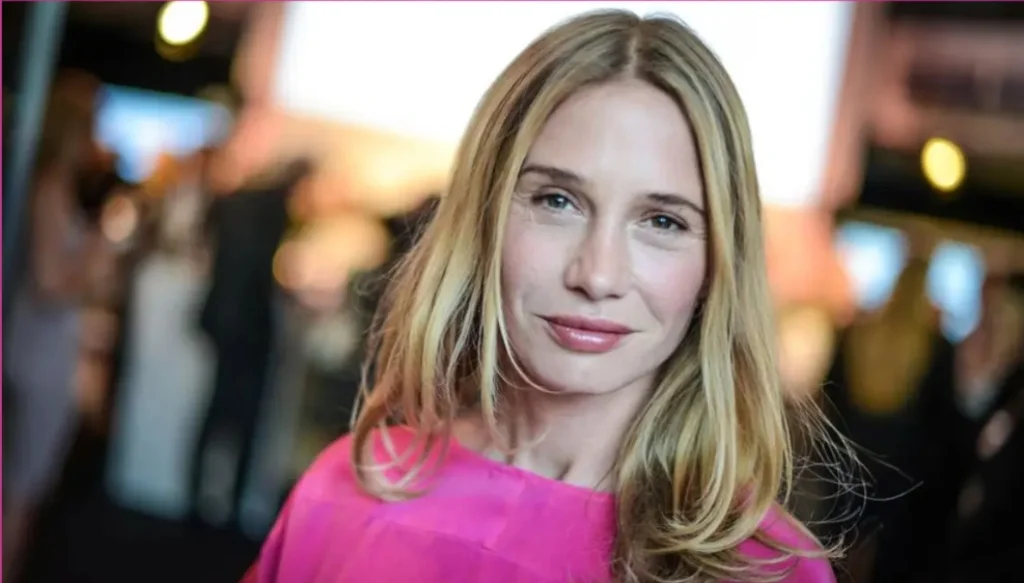
Few people in contemporary creative and wellness circles manage to carry the weight of multiple worlds without losing the thread of who they truly are. Nadeshda Ponce is one of those rare individuals. She has walked the lines between art, healing, entrepreneurship, and community building with a kind of quiet determination that doesn’t announce itself loudly but leaves a mark on everyone she touches. Her story is not a straight line. It is layered, at times complicated, and deeply human — which is perhaps exactly why it resonates with so many people who are looking for proof that a life of purpose is still possible.
We at this publication have studied her journey at length, and what we found was not just a profile of professional success but a genuinely moving account of how one woman turned personal experience, cultural identity, and relentless commitment into a body of work that continues to grow.
Who Is Nadeshda Ponce? A Portrait Beyond the Headlines
Venezuelan Roots and the Weight of Cultural Identity
Nadeshda Ponce was born and raised in Venezuela, a country with a extraordinarily rich artistic heritage, deep oral storytelling traditions, and a community culture built on warmth and collective resilience. Growing up in this enviroment, she absorb the sounds, colors, and emotional rhythms of her surroundings in a way that would later become the raw material for everything she creates.
Venezuela is a place where creativity is not neatly separated from everyday life. Music bleeds into conversation. Storytelling shapes how communities make meaning of hardship. For Ponce, these early observations was more than just memories — they became the philosophical foundation upon which her entire artistic and healing practice was eventually built.
When she later migrated to the United States and settled in Houston, Texas, she carried all of this with her. But migration is never simple. There is grief inside it, a mourning of the familiar, and a renegotiation of who you are in spaces that does not yet know your name. Ponce has spoken through her art and work about the complicated emotional terrain of living between two cultures, and it is clear that this experience did not flatten her — it deepened her.
A Quick Biographical Snapshot
| Attribute | Details |
|---|---|
| Full Name | Nadeshda Ponce |
| Profession | Artist, Entrepreneur, Wellness Advocate |
| Nationality | Venezuelan-American |
| Current Base | Houston, Texas, United States |
| Creative Focus | Visual art, performance, cultural storytelling |
| Business Background | Mortgage operations and elder care leadership |
| Wellness Philosophy | Sourcepoint Healing |
| Notable Venture | Loving Arms Assisted Living Facility |
| Core Themes | Empowerment, emotional resilience, identity, healing |
The Professional Path: From Corporate Systems to Creative Purpose
Building Discipline Inside Structured Environments
Before Nadeshda Ponce became widely recognized for her artistic and wellness contributions, she built a career in mortgage operations and business systems management. To many people, this might seem like a surprising origin story for someone who would later lead healing workshops and create emotionally charged visual art. But there is a coherent logic to it when you look closely.
Working inside structured corporate environments taught her something invaluable: that systems, when designed with human beings at their center, can be powerful vehicles for care. She developed leadership capabilities, learned to manage complex operations, and cultivated a discipline that creative work alone rarely forces you to build. These skills did not disappear when she pivot to more purpose-driven work. They migrated with her, showing up in the way she organizes programs, builds frameworks for community engagement, and runs the kind of ventures that actually sustain themselves over time.
This is an aspect of her story that often get overlooked in favor of the more romantic narrative of the artist who “followed her dream.” The truth, as with most meaningful lives, is more practical and more impressive for being so.
Founding Loving Arms Assisted Living Facility
One of the most emotionally significant chapters in Nadeshda Ponce’s career was the founding of the Loving Arms Assisted Living Facility in Houston. This was not a side project or a branding exercise. It was a full commitment to a population that society often renders invisible: the elderly.
What set this venture apart from conventional care facilities was the philosophical approach Ponce brought to it. She was not interested in creating a place where physical needs were managed while emotional ones were ignored. She wanted to build an environment where dignity, cultural sensitivity, and genuine human warmth were built into the daily experience of every resident.
Research consistently shows that emotional well-being in elderly populations has a direct impact on physical health outcomes. Studies published through the National Institute on Aging have documented how social connection and emotional support reduce mortality risk among older adults. Ponce understood this not through statistics alone but through the kind of instinctive empathy that comes from genuinely caring about people. Loving Arms was, in many ways, her first large-scale healing project.
Nadeshda Ponce as a Working Artist: Vision, Style, and Emotional Truth
The Philosophy Behind the Creative Practice
Nadeshda Ponce’s artistic output is grounded in a belief that has remaind consistent across every medium she works in: that art should be felt before it is analyzed. She is not making work for gallery walls alone. She is making work for the part of people that don’t have words yet for what they are carrying.
Her visual art tends toward bold, saturated colors and symbolic imagery drawn from both Venezuelan cultural iconography and more universal human experiences. Loss, migration, belonging, the body as a site of memory — these are themes she returns to repeatedly, not because she is stuck but because she recognizes that these are the territories where people most need accompaniment.
Her performances, when she stages them, function similarly. They are not spectacles designed to impress but experiences designed to open something up in the viewer. This is a distinctly therapeutic orientation toward art-making, one that places the audience’s interior life at the center of the creative act.
Art and the Science of Emotional Processing
There is significant academic and clinical support for what Ponce does intuitively. The American Art Therapy Association has documented extensive research demonstrating how visual art-making aids emotional processing, reduces symptoms of trauma, and builds psychological resilience. For people who finds verbal expression difficult — whether because of language barriers, cultural norms around emotional disclosure, or the nature of their particular trauma — art offers a pathway that bypass those obstacles entirely.
Ponce’s understanding of this — whether formally trained or experientially developed — shows up in every workshop she facilitated and every community program she has led. She is not asking people to make beautiful things. She is inviting them to make honest things, which is an entirely different and far more demanding ask.
Sourcepoint Healing: A Wellness Philosophy Built from the Inside Out
What Sourcepoint Healing Actually Is
Among the contributions that Nadeshda Ponce has made to the wellness landscape, her development of the Sourcepoint Healing philosophy stands as perhaps the most theoretically substantial. This is not a product or a program in the conventional sense. It is a framework for understanding and experiencing personal healing that draws on multiple traditions without being wholly owned by any single one.
At its core, Sourcepoint Healing operates on the premise that the human being is a whole system — not a collection of isolated symptoms or problems — and that meaningful healing must therefore address the whole person simultaneously. This includes the body, yes, but also the emotional interior, the cultural identity, the relational self, and the spiritual dimension that many conventional wellness approaches deliberately avoid.
The framework incorporates elements of intentional movement, creative expression, ritual practice, and mindfulness-based awareness. What distinguishes it from other holistic approaches is the explicit attention given to cultural identity as a healing resource. For people from marginalized or diasporic backgrounds, reconnecting with cultural roots can be profoundly restorative in ways that are well-documented but rarely built into mainstream wellness programming.
Healing as a Community Practice
A distinctive feature of Sourcepoint Healing is its community orientation. Ponce has consistently resisted the individualism that dominated so much of the contemporary wellness industry, where healing is framed as a private journey undertaken by a single person with sufficient resources to fund their own transformation. This framing, she seems to understood, is both economically exclusionary and philosophically incomplete.
Healing, in her framework, is something that happens between people as much as within them. Her workshops and community programs are designed to facilitate collective experience, shared vulnerability, and the kind of mutual witnessing that allows individuals to feel less alone inside their own processes.
Psychology Today has published numerous articles exploring how communal healing practices across cultures consistently produce outcomes that individual therapy alone cannot replicate. Ponce’s work exists in this tradition, even when it is not explicitly framed in clinical terms.
Women’s Empowerment and Community Leadership
Who She Shows Up For
Nadeshda Ponce has been particularly committed in her outreach to women, especially those navigating the specific pressures of life as immigrants, women of color, or people caring for others while quietly carrying their own unaddressed needs. She knows this demographic because she has been part of it. This gives her work a credibility that is impossible to manufacture and difficult to fake.
Her empowerment-focused workshops are not motivational speaking sessions dressed up in wellness language. They are structured, facilitated experiences designed to help participants reconnect with their own voices, their own authority, and their own right to take up space. The distinction matters enormously. Inspiration is momentary. The kind of internal shift Ponce works toward is meant to last.
Mentorship and the Long Game
Beyond formal programs, Ponce has invested in mentorship as a long-term strategy for community change. She understands that the work of empowerment is not completed in a single workshop or a single year but requires ongoing relationships, accountability structures, and the willingness to show up repeatedly for people who are in the middle of their process.
This orientation toward the long game, toward planting seeds rather than harvesting immediate results, is one of the things that distinguishes her from figures who are primarily interested in visibility. She seems genuinely more invested in outcomes than in recognition, which is perhaps why recognition has nonetheless found her.
Recognition, Public Presence, and Growing Influence
How Her Work Has Been Received
Nadeshda Ponce has garnered recognition across multiple fields without having positioned herself primarily as a public figure. Her reputation has largely built through the quality and consistency of her work rather than through aggressive self-promotion. This is somewhat unusual in an era where visibility is often treated as the primary currency of influence.
She has been featured in publications and platforms focused on wellness, entrepreneurship, and creative leadership. Her digital presence reflects a thoughtful, intentional approach to sharing her work — one that invites engagement without manufacturing it.
The intersection of art, wellness, and social entrepreneurship is a space that has drawn increasing attention from both mainstream media and academic researchers in recent years. Ponce’s work sits at exactly this intersection, which has contributed to the growing audience for what she does and how she does it.
A Different Kind of Leadership Model
What makes Nadeshda Ponce a notable figure in the empowerment space is not simply what she has built but how she has built it. She models a form of leadership that is relational rather than hierarchical, that draws on vulnerability as a strength rather than treating it as a liability, and that consistently centers the people it is meant to serve rather than the person doing the serving.
This is the kind of leadership that does not photograph well in a single moment but whose effects compound over time. It shows up in the people who have been through her programs and carry something forward. It shows up in the communities that are incrementally different because she chose to invest in them. It shows up in the younger women who see her working and understand that this is a life that is possible.
Final Thoughts: A Life That Earns Its Description
There are many people in the world who are called artists, healers, and leaders. Fewer are all three simultaneously, and fewer still manage to be all three without collapsing under the weight of the contradictions that each role can impose on the others. Nadeshda Ponce has found a way to hold all of these identities together, not through perfect balance but through a kind of committed improvisation that keeps returning to the same north star: the genuine well-being of other people.
Her journey from Venezuela to Houston, from mortgage operations to elder care to artistic healing practice, is not a story of a person who had it all figured out from the beginning. It is a story of someone who kept moving toward what mattered, kept learning from what did not work, and kept choosing — even when it was difficult — to orient her considerable talents toward something larger than herself.
That is, ultimately, what makes Nadeshda Ponce worth knowing about. Not the individual achievements, impressive as they are, but the coherent human being that all of those achievements add up to.
Frequently Asked Questions About Nadeshda Ponce
Who is Nadeshda Ponce?
Nadeshda Ponce is a Venezuelan-American artist, entrepreneur, and wellness advocate based in Houston, Texas. She is known for her creative work, her elder care venture Loving Arms Assisted Living Facility, and her holistic wellness framework called Sourcepoint Healing.
What is Nadeshda Ponce best known for?
She is best known for her ability to merge artistic expression, community empowerment, and holistic wellness into a coherent body of work that serves marginalized communities, particularly women and elderly individuals.
What is Sourcepoint Healing?
Sourcepoint Healing is a holistic wellness philosophy developed by Ponce that combines intentional movement, creative expression, ritual practice, mindfulness, and cultural identity as interconnected dimensions of personal and communal healing.
Where is Nadeshda Ponce originally from?
She was born and raised in Venezuela and later migrated to the United States, where she is now based in Houston, Texas.
How does Nadeshda Ponce approach empowerment work?
Her approach is communal, experiential, and long-term focused. Rather than one-off inspirational events, she facilitates structured programs designed to produce lasting internal shifts and ongoing mentorship relationships.