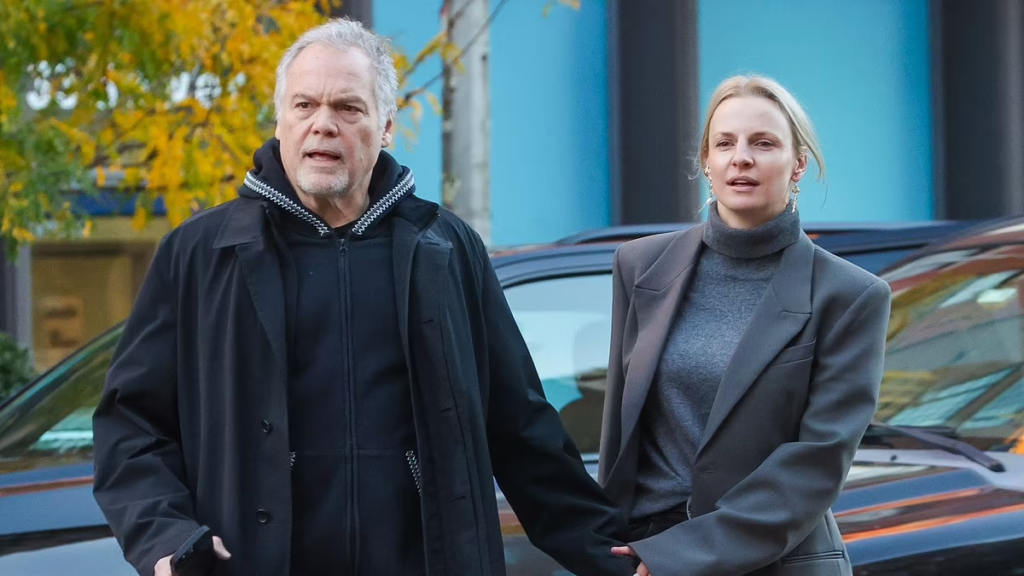
Carin van der Donk is a Dutch photographer, former international model, documentary filmmaker, and quiet force within the world of visual storytelling. Born on November 30, 1969, in the Netherlands, she has spent decades shaping a career that refuses simple categorisation. While many people first encounter her name through her connection with acclaimed actor Vincent D’Onofrio, those who look a little closer quickly discover that Carin van der Donk is a fully formed artist in her own right, one whose body of work speaks thoughtfully about culture, human dignity, and the power of a single frame to change how we see the world around us.
We have compiled this detailed overview to give readers the most complete and honest account of her life, her career, and the values that drives her forward every single day.
Carin van der Donk Early Life and Dutch Roots
Few people understands the role that geography plays in shaping artistic identity better than those raised in the Netherlands. Carin van der Donk grew up surrounded by a country with one of the deepest visual art traditions on earth, a land that produced Vermeer, Rembrandt, and an entire movement of painters who understood that light, shadow, and human presence could say more than words ever managed to. Growing up in this cultural atmosphere was not incidental to who Carin became; it was foundational.
She was raised alongside her older sister Marjan, who herself has remained closely tied to the creative world. The two siblings grew in a household that clearly valued expressive life, and that environment gave Carin a natural fluency with aesthetics and emotion from an early age. Details about her parents and specific hometown has been kept largely private, a pattern of discretion that would come to define her adult life as well. What we do know is that the artistic sensibility she carry today was seeded early and nurtured with care.
The Dutch Golden Age tradition of painting is not just a museum exhibition, it is a living cultural inheritance that many Dutch artists carry into contemporary work. For Carin, that inheritance would eventually found its expression through a camera lens rather than a paintbrush, but the underlying instinct, which was to look deeply and honestly at the world, remained exactly the same.
From Teenage Model to International Figure: The Early Career of Carin van der Donk
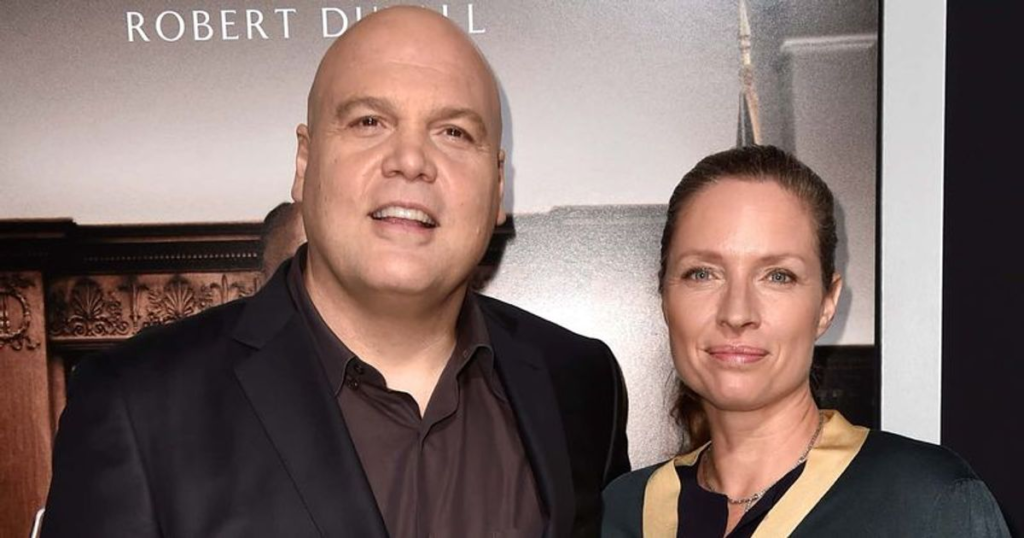
Carin van der Donk began her modeling career at just 15 years old, an age when most teenagers are still figuring out who they wants to be. She had a striking presence and a natural ability to communicate emotion without speech, qualities that made her immediately compelling in front of a camera. Her work started locally in the Netherlands before gaining international momentum when she relocated to New York City, one of the most competitive and exhilarating creative environments on earth.
In New York, Carin built a modeling resume that many aspiring models would of considered a dream. She worked alongside celebrated photographers including Richard Scavullo, Kurt Markus, and Jean-Loup Sieff, names that carry genuine weight in the history of fashion and portrait photography. These collaborations did something that most modeling work simply does not do; they gave her an education. Watching master photographers work, she observed how they thought about light, about the relationship between photographer and subject, and about the almost invisible emotional negotiation that produces a truly memorable image.
Among her commercial work, she featured in campaigns for Bumble and bumble, the renowned professional hair care brand, which at that time was cementing its reputation in the fashion industry. Her face and presence brought a grounded European quality to the work that stood out amid the louder visual language of 1980s American commercial fashion.
But even as her modeling career flourished, there was a quiet restlessness growing behind her eyes. Being looked at, she was beginning to understand, would never be as meaningful to her as looking.
The Shift Behind the Lens: Carin van der Donk as Photographer
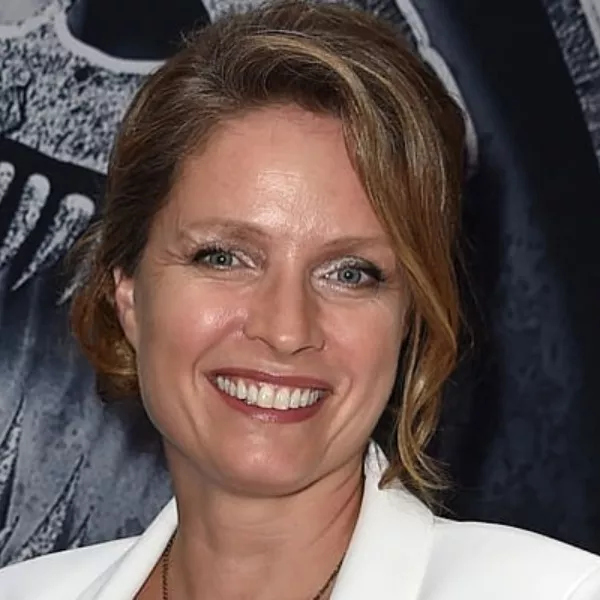
When Carin van der Donk made the decision to step behind the camera, it was not a sudden abandonment of her modeling life but a gradual, organic evolution. Her years in front of professional photographers had given her a detailed technical and emotional understanding of what the process demanded, and she brought that knowledge with her as she developed her own photographic voice.
Rather then following a conventional institutional route immediately, she initially pursued photography through hands-on practice, allowing herself the space to make mistakes, to observe without agenda, and to develop the kind of personal visual vocabulary that formal education alone cannot gives you. This self-directed early period was crucial. It allowed her instincts, her intuitions shaped by years of watching great photographers work, to speak before academic frameworks could frame them too rigidly.
She later enrolled in the Graduate Program in Documentary Practice and Visual Journalism at the prestigious International Center of Photography in New York City, one of the most respected institutions of its kind in the world. This program gave formal structure and conceptual depth to instincts she had already developed across decades. The result was a photographer who think both with her gut and with genuine intellectual precision.
Her photographic style is not loud. There is no showmanship for its own sake, no technical acrobatics designed to announce the photographer’s cleverness. Instead, Carin van der Donk’s images trusts their subjects. She gravitates toward portraiture, street photography, and documentary work where what matters most is the people and the circumstances captured, not the identity of the person holding the camera. This restraint, rare and hard-earned, is actually what makes her work so resonant. You remember the faces in her photographs. You think about the stories suggested by a glance or a gesture. The photographer herself recedes, and the human truth of the image steps forward.
Documentary Filmmaking and the Work of Carin van der Donk
Carin van der Donk’s creative reach extends beyond still photography and into documentary filmmaking, a medium that allowed her to bring motion, time, and sound to the same themes she explores through her camera. Her documentary instincts, rooted in a deep belief that ordinary life contains extraordinary stories, has produced work of genuine substance and feeling.
Her short documentary “Living Loud”, which she co-directed and produced, follows the journey of Fogo Azul, a diverse and culturally rich samba reggae drum line based in New York. The film is a celebration of how rhythm and collective performance builds community across lines of difference, a subject that clearly connects with Carin’s broader artistic mission. The joy visible in “Living Loud” is real, not manufactured. This is the work of someone who genuinely cares about the people she is documenting and who trusts that their stories deserves to be told with care and without condescension.
Beyond her own directed work, Carin has contributed still photography to significant documentary projects for HBO, including The Sentence (2018), a film about mandatory minimum sentencing and its devastating impact on American families, and Kill Chain (2020), which examined cybersecurity vulnerabilities in American election infrastructure. Her images for these productions added emotional and human weight to subjects that might otherwise have felt abstract, which is precisely what the best documentary photography does.
These contributions places her firmly within the tradition of socially engaged photography, a lineage that runs from Dorothea Lange through Gordon Parks and into the contemporary world, where images of injustice and human resilience continue to demand that viewers sit with uncomfortable truths rather then look away.
Social Activism and the Causes Close to Carin van der Donk’s Heart
One of the most revealing things about any artist is where they chose to direct their talent for free. Carin van der Donk’s decision to donate her photographic skills to political and social justice organisations says a great deal about what she values and why.
She has contributed her photography to organisations including Sister District, Future Now, Housing Justice for All, and NoIDC, causes connected to progressive electoral organizing, housing rights, and immigration justice. This is not passive liberalism expressed through a social media profile. It is active, practical solidarity. Her camera becomes a tool for movements, her skill a resource for people working on the ground toward structural change.
In a cultural moment where the relationship between art and politics is perpetually contested, Carin van der Donk’s work offers a quietly powerful answer. Art made in genuine solidarity with people who are struggling, art that sees those people clearly and represents them with dignity, is not propaganda. It is witness. And witness, carried out with honesty and skill, is one of the most important things a photographer can offers.
Her work has also been recognised within the photography community. She has been named a finalist in the Women Street Photographers competition on multiple occasions, acknowledging not just the technical competence but the narrative intelligence that distinguishes her street work from ordinary documentation.
Carin van der Donk and Vincent D’Onofrio: A Partnership Across Decades
No account of Carin van der Donk’s life would be complete without honest attention to her relationship with Vincent D’Onofrio, the American actor known for his magnetic, physically committed performances in films like Full Metal Jacket (1987), and on television through his celebrated portrayal of Detective Robert Goren in Law & Order: Criminal Intent, a role he played for over a decade. More recently, his portrayal of Wilson Fisk in the Marvel series Daredevil brought him renewed attention from a new generation of viewers.
Carin and Vincent met in New York City in the mid-1990s, a meeting between two people who was each living deeply creative lives in one of the world’s most intensely creative cities. They married in 1997, and the relationship they have built over the decades since is one characterised by genuine mutual respect, shared creative sensibility, and the kind of enduring commitment that does not photograph well because it is not performed for any audience.
Together they have two sons: Elias Gene, born in 1999, and Luka, born in 2008. Carin is also a stepmother to Leila George, Vincent’s daughter from a previous relationship, and the blended family they have created together reflects a modern reality handled with love and practical grace rather then mythologised for public consumption.
Their relationship has not been without its complications. The couple separated at certain points over the years, as long partnerships sometimes demands. But they have always maintained a connection, and the family they have built together remain central to both of their lives. Carin’s approach to family, like her approach to photography, prioritises authenticity over appearance.
Personal Values, Privacy, and the Quiet Power of Carin van der Donk
Perhaps what is most striking about Carin van der Donk, when you looks at her life as a whole, is the absolute consistency of her values across every domain. In a cultural environment that rewards exposure, she has chosen privacy. In an art world that rewards spectacle, she has chosen quietness. In a personal life connected to celebrity, she has chosen normalcy and groundedness for her children.
This is not self-effacement, nor a form of shyness that constrained a grander ambition. It is a coherent philosophy. She appears to have understood early that the most meaningful work she could do, whether as a mother, a photographer, or a documentary filmmaker, required presence and attention rather then performance. Fame is a distraction from seeing clearly. Carin van der Donk, by most accounts, has always prioritised seeing clearly.
Her Instagram presence, modest and carefully tended, gives occasional glimpses into her visual world without inviting the parasocial intimacy that social media often encourage. This is the management of privacy as an intentional act, not an accident.
Key Facts and Profile: Carin van der Donk at a Glance
| Detail | Information |
|---|---|
| Full Name | Carin van der Donk |
| Date of Birth | November 30, 1969 |
| Nationality | Dutch |
| Profession | Photographer, Documentary Filmmaker, Former Model |
| Education | International Center of Photography, New York |
| Spouse | Vincent D’Onofrio (married 1997) |
| Children | Elias Gene (b. 1999), Luka (b. 2008) |
| Known Documentary Work | Living Loud, The Sentence (HBO, 2018), Kill Chain (HBO, 2020) |
| Photography Recognition | Women Street Photographers Finalist (multiple times) |
| Activist Affiliations | Sister District, Housing Justice for All, Future Now, NoIDC |
Carin van der Donk Legacy and Lasting Influence
When we step back and looked at the full arc of Carin van der Donk’s life and work, what emerges is a portrait of someone who has made consistently brave choices, not brave in the dramatic, headline-generating sense, but brave in the quieter and more durable sense of refusing to compromise her own values for convenience or visibility.
She transitioned from one of the most visibility-dependent careers imaginable, international modelling, into work defined by the decision to make other people visible. She built a family in the unforgiving environment of New York’s creative world without sacrificing her children’s childhood to her own ambition or her husband’s fame. She put her photography in service of causes she believed in, even when that work would never carry her name to a wider audience.
The Dutch art historian Johan Huizinga once wrote about the relationship between play and seriousness in cultural life, arguing that the most meaningful human activities often holds both at once. Carin van der Donk’s life feels like evidence of that idea. Her photography is serious, committed, politically engaged, and emotionally rigorous. But the joy visible in Living Loud, the warmth evident in her portraits, and the love for community that runs through her activism work suggests that none of this was ever grim or dutiful. It was chosen, joyfully, because it mattered.
That combination, seriousness and joy, sustained over decades of genuine work, is a rarer thing than fame. And it is, ultimately, what makes Carin van der Donk worth knowing about.
Frequently Asked Questions About Carin van der Donk
Who exactly is Carin van der Donk? Carin van der Donk is a Dutch photographer, documentary filmmaker, and former international model born on November 30, 1969, in the Netherlands. She is widely recognised for her documentary and portrait photography and for her decades-long relationship with actor Vincent D’Onofrio.
What is Carin van der Donk’s nationality? She is Dutch, born and raised in the Netherlands before building much of her professional life in New York City.
When did Carin van der Donk marry Vincent D’Onofrio? She and Vincent D’Onofrio married in 1997, after meeting in New York City in the mid-1990s.
How many children does Carin van der Donk have? She has two sons with Vincent D’Onofrio: Elias Gene (born 1999) and Luka (born 2008). She is also stepmother to Vincent’s daughter Leila George.
What kind of photography does Carin van der Donk practice? Her work spans portraiture, street photography, and documentary photography. She is particularly known for work tied to social justice causes and for her emotionally honest approach to capturing human subjects.
Did Carin van der Donk study photography formally? Yes, she completed a Graduate Program in Documentary Practice and Visual Journalism at the International Center of Photography in New York City.
What documentary films has Carin van der Donk worked on? She co-directed and produced Living Loud, a short documentary following a samba reggae drum line. She also contributed still photography to the HBO documentaries The Sentence (2018) and Kill Chain (2020).
Is Carin van der Donk active on social media? She maintains a modest Instagram presence, sharing her work selectively while keeping much of her personal life private.