Some stories cuts right through you. Not because they are sensational or dramatized, but because they are real, documented, and still unresolved in ways that money can never fully fix. Daniel Villegas is one of those stories. A teenager from El Paso, Texas, locked away for over two decades for a crime he did not committed. A man who came out the other side scarred, determined, and eventually compensated in ways that shifted his financial life entirely. As of 2026, Daniel Villegas net worth is estimated between $5 million and $6 million, a figure built almost entirely from legal settlements, state compensation, and a growing career in criminal justice advocacy.
We break down every layer of that number here, from the wrongful conviction that started everything, to the landmark settlement that changed his financial trajectory forever.
Daniel Villegas: Quick Biography at a Glance
Before we get into the financial specifics, it helps to ground the reader in who Daniel Villegas actually is. He was not a public figure who chose the spotlight. He was a kid from a working-class neighborhood in El Paso who got swept up in one of the most documented wrongful conviction cases in Texas history.
| Detail | Information |
|---|---|
| Full Name | Daniel Villegas |
| Date of Birth | April 1, 1977 |
| Place of Birth | El Paso, Texas, USA |
| Age (2026) | 49 years old |
| Known For | Wrongful conviction, legal advocacy |
| Net Worth (2026) | $5 million – $6 million |
| Spouse | Amanda Villegas |
| Children | Four (three daughters, one son) |
| Occupation | Advocate, public speaker, construction mentor |
The Wrongful Conviction That Defined 22 Years of His Life

April 1993 and the Crime He Did Not Commit
Daniel Villegas was 16 years old in April 1993 when two teenagers, Armando “Mando” Lazo and Bobby England, were fatally shot in a drive-by incident in an El Paso neighborhood. The El Paso Police Department moved quickly to make arrests. What followed was a interrogation process that would later be held up as a case study of what goes wrong when law enforcement prioritizes closure over truth.
Villegas, barely old enough to drive, was brought in for questioning. Without access to a attorney and under intense pressure, he gave a confession. He recanted it almost immediately. But the damage, as they say, was already done. The confession became the centerpiece of the prosecution’s case, and physical evidence linking Villegas to the shooting was almost entirely absent from the trial record.
Legal scholars who reviewed the case years later pointed to several alarming procedural failures. The Innocence Project, which has worked to exonerate hundreds of wrongfully convicted individuals across the United States, has documented extensively how coerced confessions from juveniles are among the most unreliable forms of evidence in the criminal justice system. Villegas became a textbook example of exactly that problem.
Two Trials, One Man’s Life on the Line
What made the Villegas case particularly troubling was that it did not end cleanly. He was actually tried three separate times. His first trial in 1994 ended in a hung jury. The second, in 1995, resulted in a capital murder conviction and a life sentence. For over two decades, Villegas sat in Texas state prison, writing letters, filing appeals, and refusing to stop fighting.
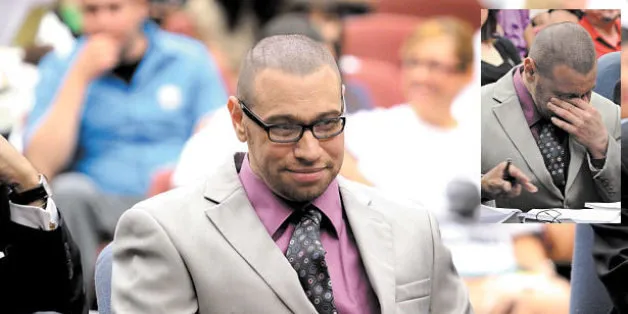
His case gained renewed attention in the 2010s as journalists and legal advocates began revisiting the original evidence. A key witness recanted testimony. Multiple individuals came forward asserting that Villegas had never been at the scene. The case was eventually granted a retrial, and in September 2018, after spending 22 years incarcerated, Daniel Villegas was acquitted of all charges by a jury that deliberated for less than two hours.
The courtroom reportedly filled with applause and tears. His wife Amanda, who had stood by him through years of hearings and appeals, was present for the verdict. For Villegas, it was not just a legal victory. It was the first moment in over two decades where the system formally acknowledged what he had been saying all along.
Daniel Villegas Net Worth in 2026: Where the Money Came From
The $6.5 Million El Paso Settlement
The single largest contributor to Daniel Villegas net worth is the civil lawsuit he filed against the City of El Paso following his exoneration. The lawsuit alleged that law enforcement officers had violated his constitutional rights during the original investigation, particularly through the coercive interrogation tactics used to obtain his confession.
In 2021, the City of El Paso agreed to a $6.5 million settlement, one of the largest payouts of its kind in the city’s history for a wrongful conviction case. While a portion of any such settlement typically goes toward legal fees and attorney costs, the remainder provided Villegas with a substantial financial foundation that he had never had access to before his arrest at age 16.
This kind of civil settlement is not automatically taxable in full under federal law, particularly when the compensation is tied to physical harm and civil rights violations, though the specifics depend heavily on individual tax circumstances. For a more detailed look at how wrongful conviction settlements are structured and what recipients can expect, the National Registry of Exonerations maintains comprehensive case data that provides broader context.
Texas State Compensation for Wrongful Imprisonment
Beyond the civil settlement, Villegas was also entitled to compensation under the Texas Tim Cole Act, legislation passed in 2009 that governs how wrongfully convicted individuals are compensated by the state. Under this law, exonerees receive $80,000 for each year they were wrongfully imprisoned, along with an annuity paid for life.
Villegas spent approximately 22 years incarcerated, which puts his state compensation entitlement at around $1.76 million in base payments, exclusive of the annuity. This lifetime annuity provides ongoing financial stability that is separate from and in addition to the civil settlement amount.
Together, these two sources of compensation form the financial backbone of Daniel Villegas net worth in 2026. Added to that is whatever income he has generated through advocacy work, speaking engagements, and his involvement in the construction industry as a mentor and consultant.
Income From Advocacy and Public Speaking
Since his release, Villegas has built a secondary income stream through public speaking and criminal justice reform advocacy. He has spoken at universities, community organizations, legal conferences, and public forums about the dangers of coerced confessions, the failures of the juvenile justice system, and the experience of rebuilding a life after two decades of wrongful imprisonment.
Professional advocates with a high-profile story and media visibility can earned anywhere from a few hundred dollars to several thousand dollars per speaking engagement, depending on the venue and audience. While we does not have exact figures for his speaking income, it reasonable to estimate that over several years of active advocacy work, this adds a meaningful amount to his overall financial picture.
Life After Exoneration: What He Built From Nothing
A Family That Waited and a Marriage That Survived
Amanda Villegas, Daniel’s wife, is a figure who rarely receives enough credit in the coverage of this case. She stood by her husband through the retrial process, the hearings, the appeals, and the years of uncertainty. The couple has four children together, three daughters and one son, and by all public accounts have worked to build a stable family environment since Daniel’s release.
Coming home after 22 years is not a clean reset. Researchers who studies the long-term effects of wrongful incarceration, including those at the Innocence Project UK, consistently documents the profound psychological impact that prolonged wrongful imprisonment has on individuals and their families. Reintegration involves rebuilding trust, navigating emotional trauma, rediscovering daily routines, and often dealing with a justice system that still creates barriers for exonerees even after a formal acquittal.
Villegas has spoken openly about these challenges. He does not present his life post-release as a fairy tale. He talk about the anger, the difficulty of adapting, and the ongoing nature of healing.
Work in the Construction Industry
One of the more grounding aspects of Daniel Villegas’s post-release life is his involvement in the construction sector. He has worked as a mentor and consultant, drawing on skills and connections he developed before and after his imprisonment. This is not a glamorous second chapter, but its honest, practical, and it speaks to a man who chose to rebuilds quietly rather than perform recovery for an audience.
The 2024 Arrest and What It Means for His Legacy
No article on Daniel Villegas in 2026 would be complete without addressing a difficult chapter that his critics have seized upon. In July 2024, Villegas was arrested in El Paso on a misdemeanor charge of assault causing bodily injury to a family member. According to El Paso Times reporting, he was booked into El Paso County Jail and released the same day after posting a $2,500 surety bond.
The arrest sparked immediate and predictable reactions. Some critics used it to question the sympathy and public support Villegas had received since his exoneration. Social media responses varied wildly, from those who argued the arrest proves a fundamental character flaw, to those who placed it squarely within the documented reality that survivors of long-term wrongful imprisonment carry complex, often untreated trauma.
The charge was a misdemeanor, not a felony. He was released within hours. And it is worth noting that the existence of a new charge does not retroactively validate a wrongful conviction that three juries, a full retrial, and decades of legal advocacy have thoroughly dismantled. These facts exists in parallel. They are both true. Holding that complexity without collapsing into a simple narrative is the honest thing to do.
Why the Daniel Villegas Case Still Matters in 2026
Juvenile Interrogations and the Problem of Coerced Confessions
The methods used to extract Villegas’s confession in 1993 were not unique. They were, and in many jurisdictions still are, disturbingly common. Teenagers lacks the psychological development, legal awareness, and support structures to withstand extended police interrogations. Research consistently shows that juvenile defendants are significantly more likely to give false confessions than adults, particularly when interrogated without legal counsel present.
The Villegas case has been referenced in academic discussions, policy debates, and state-level legislative efforts around reforming juvenile interrogation practices. Texas and several other states have moves to require that all juvenile interrogations be recorded in full and that legal counsel be present before any questioning begins.
What Financial Compensation Can and Cannot Do
The conversation around Daniel Villegas net worth inevitably raises a broader question: what does money actually fix? The $6.5 million settlement and the state compensation payments restore a degree of financial security. They provide the means for a family to live comfortably, for children to be educated, and for a man to pursue work that matters to him. That is real, and it should not be dismissed.
But no settlement number accounts for the 22 years of birthdays missed, the career never built, the friendships never maintained, or the psychological architecture of a person shaped entirely by incarceration during what should have been his young adult years. The Texas Defender Service, which advocates for fair sentencing and post-conviction relief in Texas, has written about how compensation frameworks often falls short of addressing the full human cost of wrongful imprisonment.
This is the tension at the heart of the Villegas story. A man who received a significant financial settlement is not a man who got what he deserved. He got what the law was able to offer. Those are very different things.
Daniel Villegas Net Worth 2026: Full Financial Summary
| Source | Estimated Amount |
|---|---|
| El Paso civil settlement (2021) | $6.5 million (gross) |
| Texas Tim Cole Act state compensation | ~$1.76 million |
| Lifetime annuity (ongoing) | Paid annually for life |
| Advocacy and speaking income | Estimated, ongoing |
| Total Estimated Net Worth (2026) | $5 million – $6 million |
The discrepancy between the gross settlement figures and the estimated net worth reflects attorney fees, taxes, and expenses that reduce the actual retained amount. A $6.5 million settlement, after legal costs that can run 30% to 40% of the total, along with living expenses over several years, reasonably lands a person in the $5 to $6 million net range.
Conclusion: A Number That Tells Only Part of the Story
Daniel Villegas net worth in 2026, at an estimated $5 to $6 million, represent one of the largest wrongful conviction-related financial outcomes in Texas history. The El Paso settlement alone stands as a landmark figure. And yet, anyone who reduces the Villegas story to a financial narrative is missing the actual point.
What this case documents is a systemic failure that began the moment a 16-year-old was interrogated without counsel and ended, officially, when a jury acquitted him 22 years later. The money is what the law could offer. The story is what no settlement can erase.
Daniel Villegas is now in his late forties, with a family, a platform, and a financial stability he never had as a young man. He advocates, he speaks, he mentors. And he continue to exists as living proof of why criminal justice reform is not an abstract policy debate. It is, for thousands of people across the United States, a matter of entire lives.